Northern Cyprus For Sale

Buying property in North Cyprus, explained without the sales pitch

Most sites in this market are agency brochures. This one starts with the parts that decide whether a purchase works out: which category of title deed sits under the property, what the purchase actually costs once every fee is added, and what the 2026 law changed.

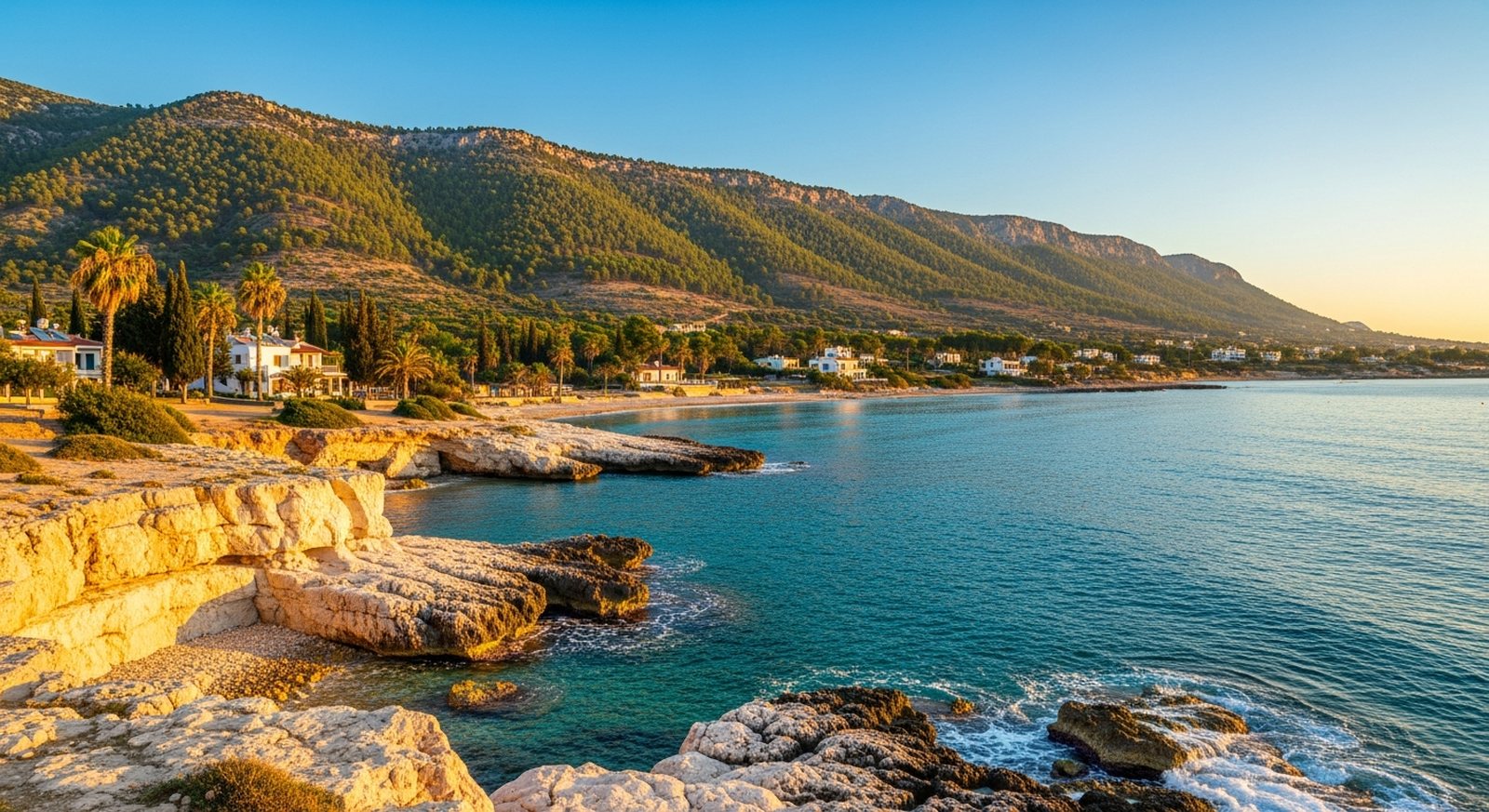
Sunlit Mediterranean bay on the northern coast of Cyprus, with pine-covered mountains rising behind low white houses
12%title transfer fee for foreign buyers since 2025 — up from 3–6%
18–19%total transaction cost on top of the asking price
26,830unsold units on the market (GİYNİK), with ~13,000 more due by 2028
5 yearsresidency granted on a registered title, with no income requirement

Start with the koçan, not the show home

In the TRNC the single most important document is the koçan — the title deed. Two properties on the same street, identical in every visible way, can carry completely different legal histories. The category of the deed is what determines how safe the purchase is, how easily it resells, and whether anyone else has a claim to the land.

A brass magnifying glass resting on blank documents on a sunlit wooden desk beside a sprig of olive leaves
CategoryWhat it meansPractical position
Turkish title (pre-1974)Land owned by Turkish Cypriots before 1974No competing pre-1974 claim attached. Rarest and most expensive.
Eşdeğer (exchange)Formerly Greek Cypriot land, allocated in exchange for property left in the southThe most common category on new developments. Carries a pre-1974 ownership history.
TMD / Tahsis (allocation)Land allocated by the TRNC, e.g. to veterans or public servantsRegularisation varies plot by plot. Requires additional checks.

A deed also records how the current owner acquired the land — the İktisap Şekli field. “Takas ile” means it came through an exchange. Reading that one line tells you more than a brochure ever will.

Have a specific koçan checked →

The price is not the price

Advertised figures are the developer’s number. What a foreign buyer actually pays is meaningfully higher, and the gap widened in 2025 when the transfer fee was standardised at 12%.

ItemRateNotes
Title transfer fee (Tapu Devir Harcı)12%Foreign buyers. Half on registration, half at final transfer.
VAT (KDV)5%On the contract or valuation price, whichever is higher. New builds.
Stamp duty (Pul)0.5%Payable within 21 days of signing.
Transformer / infrastructure£1,500–3,000New builds only.
Independent lawyer~£1,500Never use the seller’s lawyer.
Annual property tax3–5 TL per m²Roughly £15–50 a year for an apartment.
Rental income tax10%Flat, on gross rent.
Capital gains (Stopaj)2.8%One lifetime sale is exempt for private individuals.

On a £200,000 apartment that is roughly £36,000–38,000 of costs before you own anything — the equivalent of two to three years of expected capital growth at current market rates.

What changed in 2025 and 2026

Law 19/2025

In force from 16 May 2025. Raised the title transfer fee for foreigners to 12%, introduced a 7% cap on foreign ownership in certain districts, and extended the deadline for completing a transfer to two years from publication of the purchase permit.

Decree-Law 63/2026

In force from May 2026. Caps foreign ownership at three apartments, two villas in one complex, or one detached house on a plot up to 3,300 m². Land purchases are limited to 1,338 m² with one residential unit.

Right of Use Certificate

Kullanım Belgesi — where a buyer has already reached the ownership limit, this grants ten years of use while legal title stays with the seller. Full payment is required before it is issued.

The 80% project cap

No more than 80% of the units in a development zone may be sold to foreigners, and within a single parcel no more than 50% to buyers of the same nationality or to close relatives.

A sunlit lane in an old Cypriot stone village with blue shutters and bright magenta bougainvillea

Every individual purchase also needs Council of Ministers approval — passport, a police clearance certificate from your home country and proof of funds. Expect the decision to take around ten months.

The risks nobody puts on a brochure

Terraced olive groves on dry golden hillsides with the Mediterranean on the horizon

Property built on Greek Cypriot land can create legal exposure in the EU

The Republic of Cyprus treats dealing in property registered to a Greek Cypriot owner before 1974 as a criminal offence, and applies that jurisdiction beyond the island. Prosecutions since 2025 have resulted in custodial sentences, and European Arrest Warrants have been executed in other EU member states. This is a live, documented risk — not a theoretical one — and it is the reason deed provenance matters more here than anywhere else in the Mediterranean.

  • An oversupplied market. Roughly 26,830 units are listed unsold, with another 13,000 expected by 2028. Prices have held, but transaction volumes have fallen and resale is slow.
  • Limited financing. Local banks lend up to about 50% of valuation at 5–13%. International lenders generally will not touch the jurisdiction, and insurance options are narrow.
  • Exit liquidity. A small, non-recognised market means fewer buyers when you want out. Many owners sell by assigning the contract before the deed transfers.
  • Developer quality varies. Several sellers presenting themselves as developers are agencies commissioning a builder for three or four units. Ask what they have completed and delivered.

Two ways we can help

Balcony of a modern Mediterranean apartment with rattan chairs, a potted olive tree and a view over tiled roofs to a turquoise sea

Property match

Tell us the budget, the purpose and the timeline. We come back with a shortlist that fits — including the deed category for each option — rather than a catalogue you have to filter yourself.

Start a match request

Title deed check

Send the koçan for a property you are considering. A TRNC lawyer verifies the category, the registered owner, encumbrances and how the land was acquired, and you get a written summary.

Request a deed check